

Lifting light weights
There is an ongoing debate among fitness professionals and people who go to the gym about whether it is necessary to lift heavy weights after 50.
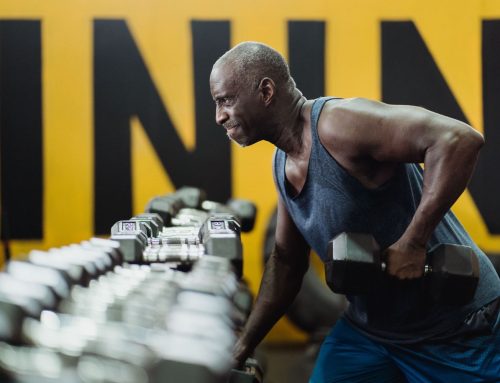
The alternative offered is that it is better to train with lighter weights and higher reps after 50 to avoid injury and wear and tear.
The strength training community of coaches and many of their clients will suggest to you that lifting heavier weight is not only safe, but more beneficial.
The goal of strength training is always to build strength. By building strength you get the added benefit of building muscle, which then improves your overall metabolic health.
The argument is that you can build muscle just as easily by training with lighter weights and higher reps.
That argument is quite often made by trainers who’ve been jacked with muscle since their twenties, but never really learned how to do the big compound lifts (squat, deadlift, bench press and overhead press) with proper form.
They may have developed some wear and tear of their own over the years, and as a result it becomes painful to do certain exercises.
The bench press is one of the main targets of this group.
Many of them suggest it is not worth it to bench press because it can cause shoulder issues.
That line of thinking exposes them right away as not having the knowledge to learn how to perform the lift properly.
A few years ago, after I got serious about strength training, I went to a nearby strength coach affiliated with Starting Strength.
My primary goal that day was to get coaching for the squat, but I signed up for a two hour session to cover all four of the aforementioned big lifts.
Eventually, we got to the bench press, and after I grabbed the bar he immediately adjusted my grip, how I positioned my back on the bench, how I positioned my feet on the floor and he changed my bar path.
I would guess that fewer than 5% of people who go to a gym ever truly learned how to bench press.
A wider grip and flaring of the elbows while you push the bar up from the chest will put pressure on the shoulders.

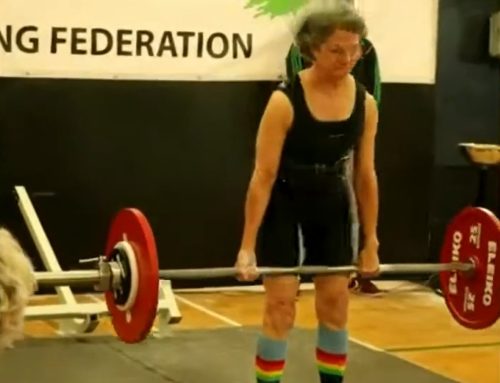
Lifting heavy
However, because these trainers are unaware of these details, they will tell you to do incline dumbbell bench presses instead, which automatically means you will train with less than ideal weight.
And therein lies the problem…
If you are new to lifting weights, or you haven’t trained in years, you simply cannot lift enough weight to provide enough stress on the body to cause it to adapt with new muscle, stronger bones and stronger connective tissue.
Thus, the better way to go is to lift heavier weight with fewer reps as discussed in our Principles of Strength Training article.
Keep in mind though, you don’t start out lifting heavy weight. You have to build up to that as you first must learn to execute the proper movement patterns of these lifts.
Therefore, you start out with conservative weights, and then you add a little bit of weight to the bar for each ensuing workout.
After a period time, the weight on the bar will then start to feel heavy, and the real training begins.
Over a period of four to six months, as you proceed through what is referred to as the novice linear progression, will gain considerable strength.
Along the way you will gain muscle mass as well.
Now, you can then switch to more of a bodybuilding style training program where you train with lighter weights and higher reps.
But guess what?
Those lighter weights are now considerably heavier than they would’ve been if you started training with light weights in the beginning.
This is how the body adapts to a systematic approach to strength training.
The four big lifts work synergistically to produce significant stress on the body. The body reacts by building muscle, strengthening connective tissue and improving bone density.
It is not unusual for novice trainees to take their squat from 95 pounds for five reps to well over 200 pounds for five reps.
After you get through this novice phase, if you want to train for hypertrophy, you now have the ability to lift heavier weight in those higher rep ranges that bodybuilders like to employ.
This is the better approach for the Champion of Aging!