
 As we age, certain realities begin to kick in.
We know that after age 50, we can’t move quite as well as we used to, we aren’t as strong and we aren’t as fast.
There’s just no getting around that.
Also, we become more susceptible to disease and sickness due to our inherited genetics, the environment around us, and personal choices we’ve made throughout our lives.
It’s no secret that many countries in the western world also have high rates of obesity.
We can counteract some of these issues with exercise (strength training and cardio), improved diet and increased overall activity.
This overall prescription will help you continue to thrive into your later years, assuming you don’t have to deal with a major illness or crippling accident.
And this leads me to the topic of this post.
We know that obesity can lead to a number of issues, such as cardiovascular disease, hypertension, diabetes, etc.
With that said, we do NEED some body fat, and that is what we will explore here.
What is essential fat?
First of all, there is a baseline percentage of fat that we need for survival and basic physiological function.
This is known as essential fat.
Essential fat is the structural fat found in the heart, lungs, organs, bone marrow, muscles and central nervous system.
It protects the organs and allows the body to function normally.
In men it is estimated that essential body fat is 2% to 5% of our overall bodyweight.
In women, it is considerably higher at 10% to 13%.
While it is not completely understood why women require more essential fat, it is surmised that women require more to support hormone regulation, reproductive functions and giving birth.
Dropping below these levels can result in compromised immune systems, hormone imbalances, infertility and even organ failure.
This is why bodybuilders and people with eating disorders often succumb to major issues and even death as a result of lack of essential fat.
How much body fat is too much?
According to several sources, including Harvard, men should strive to keep their body fat percentage below 25% and women below 36%.
It is at those levels where we become at greater risk for heart disease and other issues, even cancer.
Obesity is then defined as 30% or more for men and 42% or more for women.
But how do you know how much body fat you have?

Way too much body fat
You can go and get a Dexa Scan for upwards of $1,000 to get an accurate measure, but there are a couple of measurements you can consider without visiting a clinic.
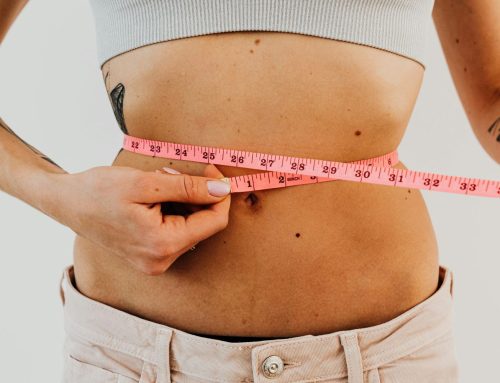
Generally speaking, a waist circumference of 40 inches or more in men and 35 inches or more in women are levels that put you at greater risk for heart disease and type 2 diabetes.
The waist-to-height ratio is viewed as a better measure than the Body Mass Index (BMI). You calculate this ratio by dividing your waist size by your height.
A healthy ratio is in the 0.4 to 0.49 range.
Now even if you are of slim build, but have a bit of a belly, your body fat percentage is probably too high if you are over 60 and you’ve done no strength training in years.
This is known as sarcopenic obesity. Your percentage body fat has gone up because your lean muscle mass has declined.
This is a very problematic condition when if you get into your advanced years because frailty comes into play.
Many of the elderly you see in assisted living facilities fall into this category.
Thin people tend to live longer, but if they don’t engage in strength training, they end up in the nursing home anyway!
So now we’ve identified a pretty wide range in body fat percentage for men and women that may be viewed as healthy.
For men it is 5% to 24%.
For women it is 13% to 35%.
How much body fat should you have after 50?
A number of men I follow on social media who are very active and fit like to shoot for a lean look that requires a body fat percentage under 12%.
That would translate to 22% or less for women.
I would argue that for men and women over 50, this could be problematic.
Why?
 While our goal at Champion of Aging is to maintain a high quality of life in case we live to an advanced age, we don’t know what curve balls life will throw at us.
In particular, cancer.
No matter what type of cancer you may get, if you don’t catch it early enough, it can sap your strength and energy.
And that body fat is your primary store of energy.
If you are carrying around a minimum level of fat because you want to look shredded, your primary store of energy will be whittled away quickly.
Then, as you battle the illness, your muscle mass will be eaten away so that even if you survive, you will be left quite weak.
Therefore, there is a sweet spot of percentage body fat that will keep you at lower risk of heart disease, diabetes, etc., but will also put you in better position to deal with a longer-term illness.
For men, that sweet spot seems to be between 15% and 20% and for women between 25% and 30%.
These are the levels that Champions of Aging should shoot for in order to maintain optimal health.