
 I read recently that less than 5% of the population over 65 engages in strength training.
Yet strength training, along with consumption of enough protein in our diet, is the only way to avoid the age-related loss of skeletal muscle mass, aka, sarcopenia.
Sarcopenia is associated with physical frailty and increased risk of morbidity (chronic diseases), in addition to all-cause mortality.
The loss of muscle mass begins some time around the age of 40 and tends to accelerate over time.
In extreme cases, some people can lose as much as 50% of their muscle mass past the age of 80 and into their 90s.
Modern medicine is allowing us to live longer, as evidenced by increases in the average life expectancies around the world.
The issue is that the disconnect between lifespan and ‘health span’ (the length of time spent in a healthy, disease-free state) has also increased.
The primary culprit is the loss of skeletal muscle mass.
The largely inevitable (to a degree) loss of skeletal muscle mass with advancing age can have major implications at both the clinical (i.e., for the individual) and societal level.
Studies have shown that there is an inverse correlation between skeletal muscle mass and all cause mortality.
In other words, the more muscle mass, the lower the risk of all cause mortality, while the lower the skeletal muscle mass, the higher the risk of all cause mortality.
Societal implications of loss of skeletal muscle mass
Given the global trend of an ageing population and the disconnect between lifespan and health-span enhancement as indicated earlier, maintenance of skeletal muscle function needs to be afforded significant attention given its vital role in…
- Mobility
- Independence
- Quality of Life
- Metabolic Functions
- And even Cognitive Health
While frailty is associated with a higher risk of hospitalization and mortality, the loss of the ability to perform everyday tasks also has a significant impact on society.
For example, the cost of full-time in home care for seniors in the U.S. averages $1,360 per week (assuming 40 hours of care).
Another issue is that patients who end up in the hospital for longer stays will lose significant muscle loss due to inactivity during their stay.
One study of healthy older individuals subject to 10 days of bed rest experienced a 13% reduction in lower extremity (knee extensor) strength and had reduced (14%) stair climbing power.
In relation to functional recovery, it has been demonstrated that compared to younger individuals, older (surgical) patients regain muscle function more slowly and less completely.
Therefore, older patients who likely have lower muscle function by virtue of age, experience accelerated losses due to disuse scenarios and also have to contend with incomplete recovery.
This combination thus predisposes older adults to development of frailty and a reduced quality of life. All of this then results in a significant burden on not only the individual, but also their families, healthcare systems and society as a whole.
Mitigating loss of muscle mass and function
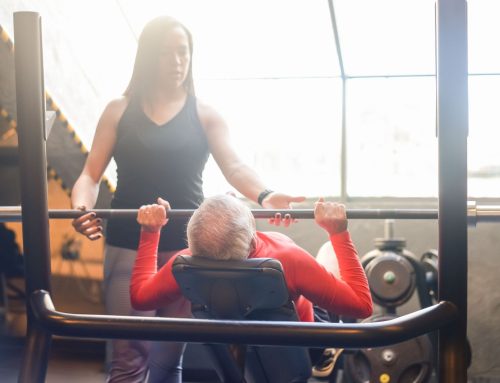
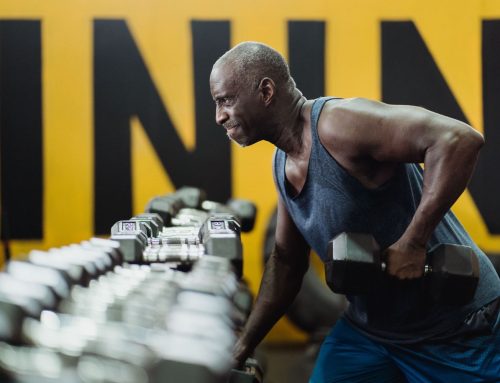
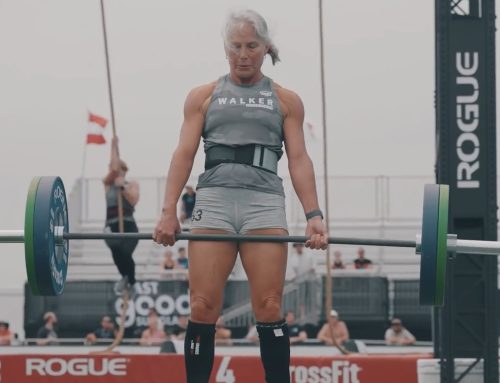
Resistance training is regarded as the “gold standard” of muscle maintenance.
And while improved strength can occur across all age groups, as we age, it becomes far more difficult to build more muscle mass.
There are a few different factors at play that we won’t get into here, but the main issue is that we do not synthesize protein into muscle as we get older.
With that said, maintaining strength and muscle mass does not require nearly as much training as is required to build strength and muscle.
Therefore, once you achieve a decent level of strength, you can train much less.
The key is that as we get older, we become intensity dependent and volume sensitive.
In other words, we need to continue to expose ourselves to lifting heavy weight, but we have more difficulty recovering from sessions with too many sets, or if we overtrain.
The bottom line is this… the longer you wait to get started with a strength training program, the more difficult it will be to maintain a high quality of life down the road.
This is why strength training is the cornerstone of becoming a Champion of Aging.




Leave A Comment